

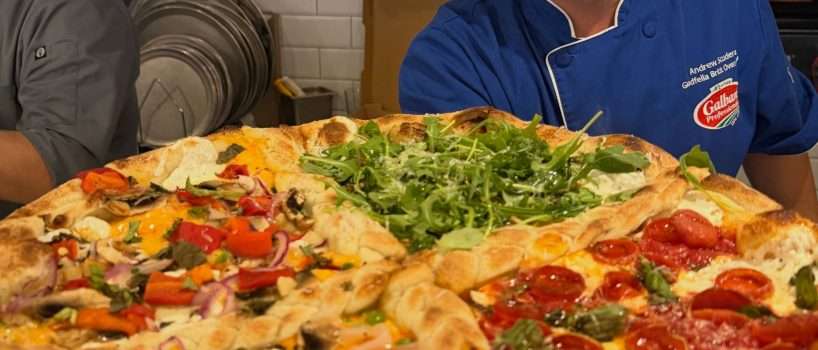
Pizza Business Training for Beginners
Pizza business training for beginners can be one of the smartest investments you make before opening a pizzeria.
You may have a great concept. You may love pizza. You may already be looking at locations, equipment, ovens, financing, or restaurant designs.
But if you have never managed professional dough production, worked a pizza station during a dinner rush, controlled food portions, trained employees, or produced dozens of pizzas consistently, there is a lot to learn before opening day.
That is exactly where the Pizza School of New York can help.
Future pizza business owners travel to New York from across the United States and around the world for intensive, hands-on training in a real restaurant environment.
Our goal is not simply to teach you how to make one great pizza.
Our goal is to teach you how to build a pizza program that can work as a business.
You do not need years of pizza experience to begin.
You need the desire to learn, practice, understand the systems, and build your business on a stronger foundation.
Why Pizza Business Training for Beginners Matters Before You Open
Opening a pizzeria is very different from making pizza at home.
A commercial operation must produce a consistent product every day, on every shift, regardless of who is working.
Your dough has to be ready when you need it.
Your sauce and cheese portions have to remain consistent.
Your employees need to understand the recipes.
Your prep has to support the expected sales volume.
Your oven has to keep up during the rush.
And the pizza served on Saturday night needs to be as good as the pizza you personally made on Tuesday afternoon.
That requires more than a recipe.
It requires a system.
Professional pizza training gives beginners an opportunity to learn and practice those systems before mistakes begin costing real money.
Pizza Training for Beginners With No Experience
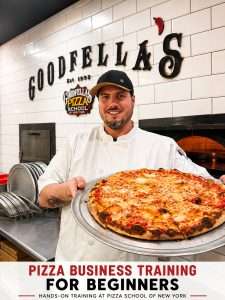 Hands-on pizza business training for beginners at Pizza School of New York.
Many future pizzeria owners come from completely different careers and industries.
Some have restaurant experience.
Others have never worked professionally in a pizzeria.
That does not mean you cannot build a successful pizza business.
It means you need to learn the fundamentals correctly.
At Pizza School of New York, students do not simply stand around watching an instructor make pizza.
You do the work.
You make the dough.
You handle the dough.
You stretch it.
You prepare ingredients.
You build pizzas.
You operate the oven.
You make mistakes.
You correct them.
And then you repeat the process.
That repetition is what begins turning information into actual skill.
Skill 1: Learn Professional Pizza Dough
Dough is the foundation of your pizza business.
Having a recipe is not enough.
A future operator should understand why dough changes and how to control it.
Professional pizza dough training should include:
- Flour selection
- Hydration
- Yeast
- Mixing
- Water temperature
- Finished dough temperature
- Dough-ball weights
- Fermentation
- Refrigeration
- Proofing
- Stretching
- Timing
- Storage
- Troubleshooting
A trained operator should eventually be able to look at a dough problem and begin determining what caused it.
Was the dough too warm?
Was fermentation too long?
Was it underproofed?
Did the mixing procedure change?
Was the refrigerator temperature different?
Was too much yeast used?
Those questions become extremely important when your restaurant depends on producing the same quality pizza every day.
Skill 2: Learn to Stretch and Build Pizza Consistently
Watching an experienced pizza maker stretch dough can make it look easy.
Doing it yourself is different.
Beginners need repetition.
The goal is not simply to open one dough ball successfully.
You need to develop the ability to consistently produce the proper size, shape, and thickness without damaging the dough.
Then comes topping.
Sauce, cheese, vegetables, meats, oils, and finishing ingredients should all have standards.
That affects both quality and profitability.
An extra ounce or two of cheese may not seem significant on one pizza.
Multiply that over hundreds or thousands of pizzas and it becomes a serious food-cost issue.
A professional pizza operation combines craftsmanship with measurable standards.
Skill 3: Learn How to Bake Pizza Properly
The oven is where everything comes together.
A future owner should learn how to recognize a properly baked pizza instead of depending only on a timer.
You need to understand:
- Oven temperature
- Hearth temperature
- Top heat
- Pizza placement
- Bake development
- Crust color
- Bottom color
- Cheese melt
- Ingredient behavior
- Pizza movement
- Finished texture
You also need to understand what happens when the oven becomes busy.
The conditions at the beginning of service may not be the same as the conditions during peak production.
An owner who understands the bake can make better decisions, train employees more effectively, and recognize problems before an inconsistent pizza reaches the customer.
Skill 4: Learn More Than One Pizza Style
Before opening a pizza business, it is valuable to experience more than one style of pizza.
Your restaurant does not have to sell everything you learn.
Training in different styles helps you understand how dough, fermentation, thickness, ingredients, preparation, and baking methods change the final product.
Training at Pizza School of New York can include products such as:
- New York-style pizza
- Brick-oven pizza
- Grandma pizza
- Sicilian pizza
- Upside-down pizza
- Specialty pizzas
- Calzones
- Rolls
- Breads
- Specialty sauces
Once you understand the fundamentals, you are in a much better position to decide what belongs on your menu.
Skill 5: Build a Menu Your Restaurant Can Actually Execute
One of the easiest mistakes for a new restaurant owner to make is creating a menu that is too large.
Every additional item adds complexity.
More ingredients.
More refrigeration.
More prep.
More recipes.
More employee training.
More inventory.
More opportunities for waste.
More opportunities for inconsistency.
A strong opening menu should be designed around what your kitchen can execute exceptionally well.
Ingredients should also work intelligently across multiple menu items.
One dough program may support pizza, calzones, rolls, and breads.
One sauce may work in several applications.
Roasted vegetables may appear on multiple pizzas and other menu items.
The goal is not simply to offer more food.
The goal is to create a menu your staff can execute successfully during a rush.
Skill 6: Learn Food Cost and Portion Control
Great pizza is essential.
But your restaurant also has to make money.
A new pizza business owner should understand how every ingredient affects food cost.
That includes:
- Dough weight
- Sauce portion
- Cheese weight
- Meat portions
- Vegetable portions
- Specialty toppings
- Garnishes
- Waste
- Remakes
If there are no portion standards, every employee may effectively be producing a different recipe.
That damages consistency and makes accurate food costing difficult.
A professional pizza business creates recipes that employees can reproduce and management can measure.
Skill 7: Learn Production and Prep Systems
A busy dinner service is often won or lost before the first customer arrives.
Is enough dough ready?
Is the cheese prepared?
Are the vegetables cut?
Are proteins portioned?
Are the sauces ready?
Does every station have what it needs?
Are backup ingredients available?
Are pizza boxes organized?
A strong preparation system prevents a restaurant from constantly reacting to emergencies.
Future owners should learn how to think in terms of:
- Par levels
- Prep quantities
- Production schedules
- Dough schedules
- Inventory
- Station setup
- Backup product
- Peak-hour volume
These systems become even more important as sales increase.
Pizza Business Training for Beginners: Learn the Rush Before Opening
This is where training in a real restaurant environment becomes particularly valuable.
Making one pizza when everything is quiet is important.
Producing pizza when several orders arrive at once is another skill entirely.
During a rush:
Tickets overlap.
Employees communicate.
Multiple pizzas are being stretched.
Multiple pizzas are being topped.
The oven fills.
Finished orders must be organized.
Customers are waiting.
Mistakes cost time and money.
Your kitchen has to continue moving.
Professional training should help a future owner begin understanding not simply how to make pizza, but how pizza production works when the restaurant gets busy.
Skill 8: Learn How to Train Your Future Employees
A pizzeria should not depend entirely on one talented pizza maker.
What happens when that employee calls out?
What happens if that employee leaves?
What happens when you want to open another location?
The owner should understand the product and systems well enough to establish standards and train other people.
That includes explaining:
How the dough is made.
How long it ferments.
How each pizza is stretched.
How much sauce is used.
How much cheese is used.
How toppings are portioned.
How each pizza should look before baking.
How the oven is managed.
What the finished pizza should look and taste like.
How the station is cleaned and reset.
Recipes and procedures eventually need to become teachable systems.
That is how you begin building a business rather than simply creating a job for yourself.
Skill 9: Understand the Business Before Making Expensive Commitments
Professional pizza training does not replace a business plan, attorney, accountant, architect, contractor, or local permitting professional.
It can, however, help you understand the type of operation you are trying to build before you spend heavily.
Your menu influences your kitchen.
Your pizza sizes affect your equipment.
Your production goals affect your oven.
Your dough program affects refrigeration and mixer requirements.
Your concept affects staffing.
Your expected sales volume affects preparation and storage.
Understanding the product allows you to ask better questions before committing money.
If you are preparing to start a pizza business, also read our guide to starting a pizza business for additional planning considerations.
Hands-On Pizza Business Training for Beginners
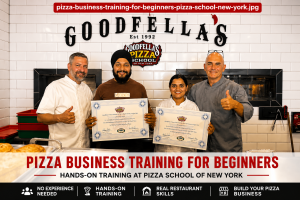 Students completing hands-on pizza business training at Pizza School of New York.
Future owners who primarily want to develop professional pizza-making skills should consider the 4-Day Pizzaiolo Course at Pizza School of New York.
The program is designed around hands-on learning and repetition.
Students work with dough, sauces, toppings, stretching, baking, pizza styles, breads, calzones, and other essential pizza skills.
The objective is not simply to leave with recipes.
The objective is to understand how to reproduce those recipes consistently.
Learn more about our 4-Day Pizza School Course.
Advanced Training for Future Pizza Business Owners
Some entrepreneurs need more than basic production training.
If you are planning an entire restaurant concept and want deeper instruction in pizza production, menu development, operating systems, par sheets, food costing, inventory, waste control, quality control, and management tools, consider the Master of Pizza Course.
This program is designed for future operators who want a more intensive combination of professional pizza skills and restaurant operating knowledge.
Learn more about the Master of Pizza Course.
National Pizza Business Training for Future Pizzeria Owners
You do not have to live in New York to attend Pizza School of New York.
Future restaurant owners come to Staten Island from across the United States and internationally to learn professional pizza production.
They take that knowledge back to their own markets.
A future operator in Florida, Texas, California, Arizona, Tennessee, Pennsylvania, New Jersey, or anywhere else in the country faces many of the same fundamental questions:
How will you make consistent dough?
How will you train employees?
What should be on your menu?
How will portions be controlled?
How will your kitchen handle volume?
What equipment do you actually need?
How will you keep the product consistent?
How will your pizza stand out in your local market?
The market changes from city to city.
The need for good systems does not.
Hands-On Pizzeria Training in a Real Restaurant
Pizza School of New York training takes place in a working restaurant environment.
That makes a difference.
Restaurants have movement.
Heat.
Preparation.
Timing.
Communication.
Orders.
Customers.
Pressure.
And real production.
Students receive direct instruction while actually performing the skills they are learning.
Videos can show you what another pizza maker does.
Hands-on instruction allows an experienced instructor to watch what you are doing, identify the problem, and help you correct it.
For a beginner, that direct feedback can dramatically shorten the learning curve.
Learn From Real Restaurant and Pizza Competition Experience
Pizza School of New York was built from decades of real restaurant and pizza-industry experience.
Our instructors have developed award-winning pizzas, operated restaurants, competed professionally, trained future owners, and helped entrepreneurs develop pizza concepts.
The Pizza School team brings together decades of restaurant experience along with 4 National Pizza Titles and 9 Regional Titles.
Awards are important.
But for a future restaurant owner, the bigger value is learning from people who understand what happens after the competition is over and the restaurant doors open.
Making great pizza is the beginning.
Producing it consistently, training employees, controlling portions, managing a rush, and building a business around that product is the real challenge.
You can also read our Pizza School testimonials and student success stories to learn about the experiences of students who have trained with us.
When Pizza Business Consulting Makes Sense
Training teaches you how to execute the product.
Consulting can help with the business being built around it.
Future pizza operators may need additional help with:
- Restaurant concept development
- Menu planning
- Equipment recommendations
- Kitchen workflow
- Food-cost systems
- Operating procedures
- Employee training
- Production planning
- Startup strategy
Pizza School of New York also provides pizzeria consulting services for entrepreneurs who need assistance beyond the training program.
The earlier a major mistake is identified, the easier it usually is to correct.
Changing something on paper is far easier than changing a completed restaurant kitchen.
Frequently Asked Questions About Pizza Business Training for Beginners
Is Pizza Business Training for Beginners Good for Someone With No Experience?
Yes. Professional pizza skills can be learned through hands-on instruction, repetition, and practice. You do not need to arrive as an experienced pizzaiolo. You should arrive prepared to work, ask questions, practice, and learn the systems behind commercial pizza production.
Should I Attend Pizza School Before I Find a Restaurant Location?
Training early can be extremely useful because understanding your menu, production method, equipment requirements, and workflow can help you make better decisions when evaluating potential restaurant locations.
Do I Have to Live in New York to Attend Pizza School?
No. Students travel to Pizza School of New York from throughout the United States and internationally. The school is located in Staten Island, New York.
Will I Learn How to Make Professional Pizza Dough?
Yes. Dough is one of the foundations of professional pizza training. Students learn about mixing, fermentation, handling, stretching, timing, temperature, and troubleshooting.
Will I Learn More Than New York-Style Pizza?
Yes. Training can include several pizza styles and related products, including New York-style pizza, Grandma pizza, Sicilian pizza, specialty pizzas, calzones, rolls, breads, sauces, and other preparations depending on the course.
Does Pizza School Teach Restaurant Operations?
The amount of operational training depends on the program you select. Advanced training can include menu development, food costing, par levels, inventory, waste control, quality control, workflow, and employee training systems.
Can Pizza School Help Me Develop My Restaurant Concept?
Yes. Pizza School of New York also offers consulting for future operators who need help with menu development, equipment, workflow, operational systems, and other areas of restaurant startup planning.
Which Pizza Course Is Best for a Beginner?
That depends on your goals. The 4-Day Pizzaiolo Course focuses heavily on hands-on professional pizza-making skills. The Master of Pizza Course provides additional training for entrepreneurs who also want deeper menu and operational development.
Pizza Business Training for Beginners Can Be Your First Investment
Opening a pizzeria can require a major investment of money, time, and energy.
Before investing heavily in walls, signs, ovens, equipment, furniture, and construction, invest in understanding the product you plan to sell.
Pizza business training for beginners can give a future owner a foundation in dough, recipes, baking, menu development, portion control, production, workflow, and employee training.
You do not need to arrive as an expert.
That is why you train.
Come to New York.
Work hands-on.
Make the dough.
Stretch the pizza.
Work the oven.
Learn the systems.
Ask questions.
Make mistakes while you are learning—not while a dining room full of paying customers is waiting.
Then take that knowledge back home and build your own pizza business.
Start Your Pizza Business With Professional Training
If you are serious about opening a pizzeria, talk with us before opening day.
Pizza School of New York provides professional hands-on pizza training for future restaurant owners from across the United States and around the world.
Call 718-987-2422 to discuss your pizza business plans, upcoming training dates, and which course is right for you.
Train first. Open stronger.